 Wayne Chen
1️⃣ First Things First: What Even Is the UEFA Champions League?
- Launched in 1955 as the European Champion Clubs’ Cup, originally a straight knockout tournament reserved solely for domestic league winners.
- Rebranded to its current “Champions League” title in 1992, with the introduction of group-stage football to expand competition scope.
- The 2025-26 campaign marks the 70th overall season and the 33rd edition under the modern Champions League branding.
- Defending European royalty: Real Madrid claimed the 2024-25 UCL crown after defeating PSG in the final, and now aim to defend their continental supremacy.
- Historic brand-new league phase format: Traditional four-team groups have been replaced entirely, reshaping matchups, strategies and the path to the Budapest final.
2️⃣ The 2025-26 UCL Format: All About the New “League Phase”
- Each of the 36 clubs played 8 total league phase matches: 4 home fixtures 🏠 and 4 away fixtures 🚗.
- Opponents were selected from three separate seeded pots, ensuring every side faced 8 distinct opponents with no repeat matchups.
- Standard global football points system remains unchanged: 3 points for a win ✅, 1 point for a draw 🟰, 0 points for a defeat ❌.
- Ranked 1st to 8th: Earned automatic, direct qualification to the Round of 16.
- Ranked 9th to 24th: Competed in two-legged knockout playoffs to secure the remaining 8 Round of 16 berths.
- Ranked 25th and below: Eliminated from all UEFA elite competitions with no Europa League drop-down pathway.
- Higher-ranked league phase teams get home advantage in the second leg of knockout ties.
- Upsets matter more: If an underdog beats a higher-seeded team, they “inherit” the higher seed’s status (better fixtures later on!)
3️⃣ How Teams Qualified for 2025-26 UCL (Simplified)
- UEFA ranks all European leagues by five-year continental performance; higher-ranked leagues receive additional Champions League allocation spots.
- Total composition: 29 automatic league phase qualifiers + 7 play-off qualifiers = 36 teams overall.
- 2025-26 new rule: European Performance Spots, two extra allocation slots awarded to leagues with the best collective 2024-25 European results. This expansion granted the Premier League a record six representatives this season 🇬🇧.
- England (6 teams): Liverpool, Arsenal, Manchester City, Chelsea, Tottenham Hotspur, Newcastle United
- Spain (5 teams): Barcelona, Real Madrid, Atlético de Madrid, Athletic Club, Villarreal
- Italy (4 teams): Napoli, Inter Milan, Atalanta, Juventus
- Germany (4 teams): Bayern München, Borussia Dortmund, RB Leipzig, Bayer Leverkusen
- France (3 teams): Paris Saint-Germain (defending champs), Lens, Marseille
4️⃣ Full 2025/26 Qualified Teams List (With Seedings & Storylines)
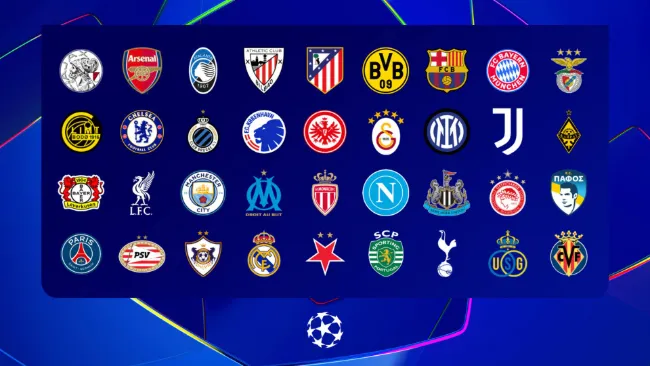
The stage is set for a historic edition of the UEFA Champions League. The 2025/26 season, the 71st of Europe's elite club competition, has reached its league phase, bringing together 36 teams from across the continent in a thrilling new format.
As a football fan, seeing the full list of qualifiers is always a moment of anticipation. It’s a mix of familiar giants, ambitious challengers, and wonderful underdog stories. This guide breaks down all 36 teams, explains the crucial seeding system, and highlights the must-follow narratives on the road to the final in Budapest.
🌍 The Complete 36: League Phase Qualifiers
The league phase is a true mosaic of European football. The table below organizes all qualifying teams by their national association and notes how they secured their prestigious spot.
| Association (Country) | Qualified Teams (✔ = Automatic, ⚽ = Play-off Winner) |
|---|---|
| England | Arsenal ✔, Chelsea ✔, Liverpool ✔, Manchester City ✔, Newcastle United ✔, Tottenham Hotspur ✔ |
| Spain | Athletic Club ✔, Atlético de Madrid ✔, Barcelona ✔, Real Madrid ✔, Villarreal ✔ |
| Italy | Atalanta ✔, Inter ✔, Juventus ✔, Napoli ✔ |
| Germany | Bayern München ✔, Borussia Dortmund ✔, Eintracht Frankfurt ✔, Leverkusen ✔ |
| France | Monaco ✔, Marseille ✔, Paris Saint-Germain ✔ (Holder) |
| Netherlands | Ajax ✔, PSV ✔ |
| Portugal | Benfica ⚽, Sporting CP ✔ |
| Belgium | Club Brugge ⚽, Union SG ⚽ |
| Turkey | Galatasaray ✔ |
| Czechia | Slavia Praha ✔ |
| Denmark | Copenhagen ⚽ |
| Greece | Olympiacos ✔ |
| Norway | Bodø/Glimt ⚽ |
| Cyprus | Pafos ⚽ |
| Azerbaijan | Qarabağ ⚽ |
| Kazakhstan | Kairat Almaty ⚽ |
A Note on Qualification: A total of 29 teams qualified automatically. This includes domestic league placings, the Champions League holder (Paris), and the UEFA Europa League holder (Tottenham). The final seven spots were fiercely contested through the summer qualifying play-offs, with winners marked above.
Seedings Unpacked: Who’s in Which Pot (and Why It Matters)
Pot 1: The Title Contenders (No Surprises Here)
Pot 2: The “Dark Horse” Contenders
Pot 3: The “Spoiler” Teams
Pot 4: The Debutants & Underdogs
Can’t-Miss Storylines: The Narratives Shaping the Season
1. England’s “Big 6” Takeover (A Record!)
2. The Debutants Making History
- Bodø/Glimt (Norway): The northernmost team ever to reach the league phase. They play in a tiny stadium (capacity 8,000!) but have a fearless style—they drew 1-1 with Marseille in Matchday 3.
- Kairat Almaty (Kazakhstan): They beat three teams in qualifying (including Scotland’s Rangers) to get here. Their fans traveled 3,000+ km to watch their Matchday 1 game in Copenhagen—pure passion.
- Pafos (Cyprus): A small club from a league rarely in the UCL spotlight. They lost 2-0 to Bayern in Matchday 2, but their players celebrated just getting to share the pitch with Harry Kane.
- Union Saint-Gilloise (Belgium): A community-owned club that’s defied the odds. They beat Fenerbahçe (Turkey) in the play-offs and have already picked up 4 points in the league phase.
3. Real Madrid’s Quest to Reclaim the Throne
4. PSG’s Defense: Can They Break the “Champion’s Curse”?
How They Qualified: The Road to the League Phase
- 29 teams qualified automatically: Most via their domestic league (e.g., Man City won the Premier League, so they got a spot). PSG qualified twice—once as defending UCL champion, once via Ligue 1—so UEFA had to “rebalance” (give their extra spot to another team). Tottenham also got an automatic spot as Europa League winners.
- 2 spots from European Performance Spots: England and Spain earned these for having the best collective performance in 2024/25—hence England’s 6 teams!
- 7 spots from qualifying: Teams like Kairat Almaty and Bodø/Glimt fought through three qualifying rounds and a play-off (all two-legged ties) to get here. The play-offs in August were brutal—Crvena Zvezda (Serbia) lost to Bodø/Glimt by just one goal, for example.
5️⃣ 2025-26 UCL Schedule: Key Dates You Can’t Miss
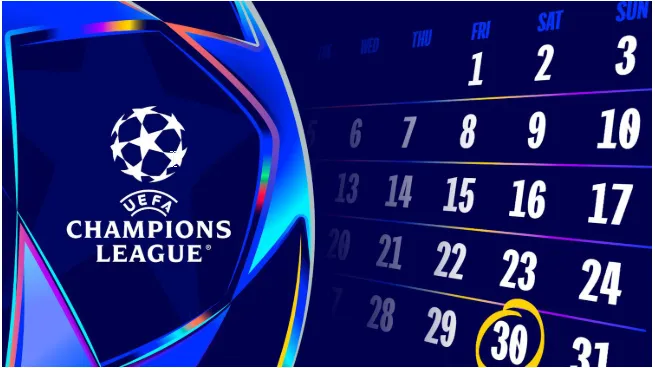
The stage is set, the giants of European football know their fate, and now it's time to mark your calendars. The 2025/26 UEFA Champions League season is shaping up to be one of the most thrilling in recent memory, packed with drama from the first qualifying ball kicked in July to the final crescendo in Budapest next May .
For fans, understanding the new league-phase schedule is more crucial than ever. It’s not just about watching your team play; it’s about tracking their fight for a top-8 spot (which means direct qualification to the last 16) or, at the very least, a place in the top 24 to keep their dreams alive. Every single matchday is a high-stakes chapter in the story.
Here is your complete, can't-miss guide to every key date on the road to Budapest.
🗓️ The Complete 2025/26 Season Timeline at a Glance
This season spans nearly a full year of elite football. The table below lays out the entire journey from the early qualifiers to the grand finale.
| Stage | Key Dates | What Happens |
|---|---|---|
| Qualifying Rounds | July – August 2025 | Teams from across Europe compete for the final seven spots in the League Phase. |
| League Phase Draw | 28 August 2025 | The 36 teams were drawn to face 8 different opponents (two from each seeding pot). |
| League Phase | 16 Sept 2025 – 28 Jan 2026 | 144 matches where all 36 teams battle for ranking. The top 8 advance directly; teams 9th-24th enter playoffs. UEFA.com |
| Knockout Phase Playoffs | 17/18 & 24/25 Feb 2026 | Teams that finished 9th-16th face those 17th-24th for the final eight spots in the Round of 16. |
| Knockout Draw | 27 February 2026 | The draw for the Round of 16, quarter-finals, semi-finals, and final (for administrative purposes) takes place. |
| Round of 16 | 10/11 & 17/18 Mar 2026 | The traditional two-legged knockout ties begin. |
| Quarter-finals | 7/8 & 14/15 Apr 2026 | The competition intensifies. |
| Semi-finals | 28/29 Apr & 5/6 May 2026 | The final four battle for a place in Budapest. UEFA.com |
| 2026 UEFA Champions League Final | Saturday, 30 May 2026 | The season culminates at the Puskás Aréna in Budapest, Hungary. |
📅 The League Phase: Your Match-by-Match Calendar
The heart of the new Champions League is the League Phase. From September to January, there will be football under the lights every two weeks. The results in these eight games determine everything.
Here are the official matchdays. Mark them in your calendar now:
| Matchday | Dates |
|---|---|
| Matchday 1 | 16–18 September 2025 UEFA.com |
| Matchday 2 | 30 Sept – 1 Oct 2025 |
| Matchday 3 | 21–22 October 2025 |
| Matchday 4 | 4–5 November 2025 |
| Matchday 5 | 25–26 November 2025 |
| Matchday 6 | 9–10 December 2025 |
| Matchday 7 | 20–21 January 2026 |
| Matchday 8 | 28 January 2026 |
Why These Dates Matter More Than Ever: Under the new format, your team’s final league position grants a huge advantage. Finishing in the top four seeds them for the quarter-finals, guaranteeing a home second leg. Finishing first or second does the same for the semi-finals. This means the battle for the summit of the 36-team table will be fiercely competitive until the very last game on January 28th.
🔄 Draw Dates — Mark Your Calendar
Want to know when fans everywhere find out the next round’s matchups? These are the dates everyone watches:
| Draw | Date |
|---|---|
| League Phase Draw | 28 August 2025 |
| Knockout Play-offs Draw | 30 January 2026 UEFA.com |
| Round of 16 → Final Path Draw | 27 February 2026 UEFA.com |
These draws bring excitement and anticipation — especially the February draw that lays out the path to the final.
⚔️ The Knockout Gauntlet: The Road to Budapest
Once the league dust settles, the classic, nerve-shredding knockout football begins. The dates for the two-legged ties are set.
| Knockout Round | First Legs | Second Legs |
|---|---|---|
| Play-Offs | 17/18 February 2026 | 24/25 February 2026 |
| Round of 16 | 10/11 March 2026 | 17/18 March 2026 |
| Quarter-finals | 7/8 April 2026 | 14/15 April 2026 |
| Semi-finals | 28/29 April 2026 | 5/6 May 2026 UEFA.com |
Every leg matters — whether you’re rooting for tactical masterclasses or edge-of-your-seat upsets.
🏆 The Grand Finale: Budapest Awaits
| Event | Details |
|---|---|
| Champions League Final | 30 May 2026 |
| Venue | Puskás Aréna, Budapest, Hungary |
| Why It’s Special | First-ever UCL final in Hungary |
Whether you’re planning to watch at home or travel to Budapest, this date is the one everyone circles the moment the season starts.
📌 Fan Tips to Make the Most of These Dates
✔ Bookmark the schedule and set reminders for matchdays — this season’s league phase spans four months.
✔ Don’t miss the draw dates — they’re perfect opportunities for content and social buzz.
✔ Knockout rounds bring unpredictability — be ready for dramatic two-leg ties!
6️⃣ How to Watch the 2025-26 UCL (Global Guide for Beginners)
Europe: The Heart of UCL Action
|
Country/Region
|
Official Broadcast Partners
|
Official Links
|
|---|---|---|
|
Albania
|
Tring
|
|
|
Austria
|
Sky Austria, Canal+, Servus TV*, ORF*
|
|
|
France
|
Canal+
|
|
|
Germany
|
DAZN, Amazon Prime, ZDF*
|
|
|
Italy
|
Sky, Amazon Prime
|
|
|
Spain
|
Telefonica
|
|
|
United Kingdom
|
TNT Sports, Amazon Prime, BBC*
|
|
|
Netherlands
|
Ziggo Sport
|
|
|
Sweden
|
Viaplay
|
Africa & Middle East: Catch the Action Across Continents
|
Country/Region
|
Official Broadcast Partners
|
Official Links
|
|---|---|---|
|
Middle East/North Africa
|
beIN
|
|
|
South Africa
|
SuperSport
|
|
|
Nigeria
|
SuperSport
|
|
|
Cameroon
|
CRTV, SuperSport, Canal+, New World TV
|
|
|
Sub-Saharan Africa
|
SuperSport, New World TV, Canal+
|
Americas: From North to South, UCL Excitement Delivered
|
Country/Region
|
Official Broadcast Partners
|
Official Links
|
|---|---|---|
|
United States
|
Paramount+, TUDN, DAZN
|
|
|
Canada
|
DAZN
|
|
|
Brazil
|
TNT Sports, SBT
|
|
|
Argentina
|
FOX Sports Argentina, ESPN
|
|
|
Mexico
|
Max, FOX
|
|
|
South America (excluding Brazil)
|
ESPN
|
Asia & Pacific: Watch from Every Corner of the Region
|
Country/Region
|
Official Broadcast Partners
|
Official Links
|
|---|---|---|
|
PR China
|
iQIYI
|
www.iqiyi.com (Watch via Sports Channel)
|
|
Hong Kong SAR
|
beIN
|
|
|
Macau SAR
|
TDM
|
|
|
Taiwan/Chinese Tapei
|
Elta
|
|
|
Japan
|
WOWOW, Lemino*, U-NEXT*
|
WOWOW | Lemino
|
|
South Korea
|
SPO TV
|
www.spotv.co.kr
|
|
Australia
|
Stan Sport
|
|
|
New Zealand
|
DAZN
|
|
|
Singapore/Malaysia/Thailand
|
beIN
|
|
|
India/Pakistan/Bangladesh
|
Sony, Tapmad
|
Special: In-Flight & In-Ship Viewing
Beginner’s Pro Tips for Watching UCL
- Check subscription requirements: Most streaming platforms (like DAZN, Paramount+, iQIYI) require a paid subscription to watch live UCL games. Some offer free trials—great for testing the service!
- Don’t mix up rights: Remember the * and ** symbols! Platforms marked with * only show highlights, not live games. Always confirm live broadcast rights on the official partner’s website.
- Time zone hack: UCL matches are usually scheduled in Central European Time (CET). Use a time zone converter to find out when games start in your local time—no more missing kickoffs!
- Multi-device access: Most official platforms let you watch on phones, tablets, TVs, and laptops. For example, iQIYI’s UCL broadcast is available on its app, web端, and 奇异果 TV 端 —watch wherever is most convenient for you.
- Stay updated with UEFA: For the latest broadcast partner info (in case of changes), visit UEFA’s official “Where to Watch” page: UEFA.com Where to Watch
7️⃣ Key Terms Every Beginner Should Know (UCL Glossary)
- UEFA Coefficient: The ranking system UEFA uses to rate leagues and teams based on their European performance over 5 years. It decides how many qualification spots each league gets and how teams are seeded.
- Seeded Pots: Before the league phase, the 36 teams are split into 4 pots based on their coefficients. The top teams (like Real Madrid, Man City, and PSG) go into Pot 1, and lower-ranked teams go into Pots 2-4. This ensures big teams don’t face each other too early in the league phase.
- Two-Legged Tie: A match-up between two teams that plays twice—once at each team’s home stadium. The winner is decided by theaggregate score (the total goals from both legs). If the aggregate is tied, away goals used to be a tiebreaker, but now it goes to extra time and penalties if needed.
- Inherited Seed: A new rule this season! If a lower-seeded team beats a higher-seeded team in the playoffs or knockout phase, they take over the higher seed’s status. That means they get home advantage in future ties and better positioning in future draws.
- Aggregate Score: The total number of goals a team scores across two legs of a knockout tie. For example, if Team A wins 2-0 at home and loses 1-0 away, their aggregate score is 2-1, so they advance.
8️⃣ 2025-26 UCL Storylines to Follow (Why This Season Will Be Unforgettable)
- PSG’s Title Defense: After years of trying, PSG finally won their first UCL title last season. Can they become the first team since Real Madrid (2017-18) to retain the trophy? They have Mbappé leading the line, so don’t count them out—but the new format means they’ll face tougher competition earlier, which will test their depth.
- English Dominance?: With 6 Premier League teams in the league phase, this is the most English teams ever in the UCL. Man City (2023 champions), Liverpool (6-time champions), and Arsenal (looking for their first title) are all serious contenders. Could we see an all-English final for the first time since 2021 (Liverpool vs. Chelsea)?
- Dark Horses and Debutants: Keep an eye on teams like Kairat Almaty (Kazakhstan’s first-ever UCL league phase team) and Sporting CP (Portugal’s underdogs with a young, talented squad). Upsets are what make the UCL magical—remember when Sheriff Tiraspol beat Real Madrid a few seasons ago? It could happen again!
- Star Players to Watch: Erling Haaland (Man City) is chasing the UCL goals record, Jude Bellingham (Real Madrid) is looking to build on his breakout season, and Kylian Mbappé (PSG) will be hungry to win back-to-back titles. These players can single-handedly win matches, so their performances will be must-watch TV.
9️⃣ FAQ for Beginners (Answering Your Most Common Questions)
- Q: How many teams are in the 2025-26 UCL? A: 36 teams in the league phase (the main part of the tournament). In total, over 80 teams compete across qualifying rounds, but only 36 make it to the league phase.
- Q: Why is the format different this season? A: UEFA changed the format to add more blockbuster matches (so you get to see top teams play each other more often) and make the competition more competitive. The old group stage sometimes had lopsided matches, but the new league phase should be tighter.
- Q: Do UCL winners qualify for next season’s UCL? A: Yes! The defending champion gets an automatic spot in the next season’s league phase, regardless of how they perform in their domestic league. They also get a spot in the 2026 FIFA Intercontinental Cup (a match against the South American champions).
- Q: How much prize money do teams get? A: A lot! Teams earn millions of euros just for qualifying for the league phase, and they get more money for winning matches and advancing through the knockout stages. The 2025-26 champions are expected to earn over €80 million in total—crazy, right?
- Q: What’s the difference between the UCL and the Europa League? A: The UCL is Europe’s top club competition, while the Europa League is the second tier. Teams that don’t qualify for the UCL (or get eliminated early) can play in the Europa League, but the UCL has better teams, more prestige, and bigger prize money.
🔟 Champions League vs Europa League: What’s the Difference?
| Competition | Level | Who Plays |
|---|---|---|
| Champions League | Top-tier | Best clubs from each league |
| Europa League | Second-tier | Strong but lower-ranked clubs |
| Conference League | Entry-tier | Emerging European teams |
Winning the Champions League is the ultimate club achievement in Europe.
1️⃣1️⃣ The Trophy, Anthem & Traditions
Few things in football are as iconic as:
- The Champions League trophy (“Big Ears”)
- The legendary anthem
- Packed stadiums under floodlights
- Dramatic last-minute goals
For fans, Champions League nights feel different — louder, tenser, and unforgettable.
1️⃣2️⃣ Why the Champions League Matters
The Champions League isn’t just another tournament. It’s where:
- Legacies are built
- Managers prove themselves
- Players become global superstars
Even casual fans tune in because the stakes are always massive.
1️⃣3️⃣ Final Thoughts: How to Enjoy the 2025-26 UCL as a Beginner
- Pick a team to root for! It could be your favorite domestic team (if they’re in the UCL), a team with a player you love, or even a dark horse—having a team to cheer for makes every match more exciting.
- Track the league phase standings. Since every match counts, watching the standings update throughout the season is part of the fun. You’ll start to learn which teams are strong, which are struggling, and which could pull off upsets.
- Join the conversation! Follow football blogs (like mine!), listen to podcasts, and chat with other fans on social media. The UCL community is huge, and it’s a great way to learn more and share your excitement.